If you manage rental property in Columbia, what you need from a heating and cooling company is different from what a homeowner needs. You need the phone answered, the tenant handled, the unit back in service before it becomes a complaint, and a bill you can reconcile against a property. That is the work we're set up for — residential and commercial, single houses through multi-unit buildings.
Why does Columbia have so much rental property?
Because it is a university town three times over. Roughly 40,000 students attend the University of Missouri, Columbia College and Stephens College, and the housing stock reflects it: Columbia is only 48.7% owner-occupied — 25,592 of 52,564 occupied units. That leaves on the order of 27,000 renter households in the city, a rental market roughly the size of a mid-sized Missouri town all on its own.
It also means a large share of the city's furnaces and air conditioners are not maintained by the person living in front of them. Nobody changes a filter in a unit they're leaving in May. That is exactly why a planned maintenance relationship pays for itself across a portfolio, and why emergency response matters more here than anywhere else in Boone County.
What do property managers actually need from an HVAC company?
Speed and predictability, in that order. Sentiment is not the product — a unit that cools is.
- Repair response that doesn't wait for business hours. A no-heat call in January and a no-cooling call in July are both clocks, and they run whether or not it's a weekend.
- No after-hours premium. We don't charge extra for nights, weekends or holidays — so the decision to dispatch is never a budget calculation.
- Direct tenant coordination. Hand us the contact and the access notes and we'll schedule with the occupant, keeping you copied.
- One account across addresses. Multiple properties can bill to a single account, with the work identified by property and unit.
- Scheduled maintenance. Annual service agreements, so filters, coils and drain lines get handled on a calendar instead of after a complaint.
- All brands, any vintage. Whatever is in the closet or on the roof, whether or not we installed it.
How do you handle Columbia's turnover season?
Columbia's rental calendar is unusually concentrated. Leases empty out around the May move-out and refill for the August move-in, and those weeks are when a portfolio's deferred HVAC work all comes due at once — the unit nobody reported, the condenser that limped through last summer, the filter that hasn't moved since the previous tenant.
The answer is to plan the block rather than chase it. We'll schedule multi-unit turnover work in advance so the units are checked, serviced and documented while they're empty, which is the only time that work is easy. August is also peak cooling season here — Columbia averages 1,248 cooling degree days a year with July and August the heaviest months — so an air conditioner that fails during move-in week fails in front of a brand-new tenant.
| When | What it usually means | What we schedule |
|---|---|---|
| May — move-out | Units empty, deferred issues surface | Cooling checks, filter and coil service, repair-or-replace calls |
| June–August — peak cooling | Heaviest cooling load of the year | Emergency response, condensate and airflow problems |
| August — move-in | New tenants, no tolerance for a dead unit | Pre-occupancy verification, fast repair turnaround |
| September–October | Ahead of the heating season | Heating inspections across the portfolio |
| November–February | January normal low near 21°F | 24/7 no-heat response, no after-hours fees |
What kind of property do you work on?
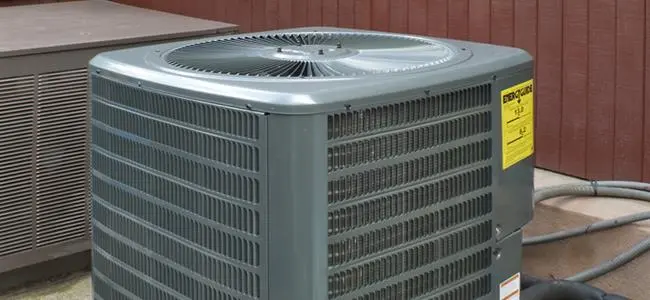
Single-family rentals, duplexes, small apartment buildings, mixed-use and commercial property. The equipment ranges accordingly: gas furnaces and split systems in older houses near campus, heat pumps in newer construction, packaged and rooftop units on commercial buildings. Columbia's median home was built in 1993, and 31.8% of housing predates 1980 — so a Columbia portfolio typically holds a mix of equipment generations, and the older end is where ductless mini-splits often solve a problem that ductwork can't.
Heating fuel splits about the way you'd expect in a city this size: 53.9% natural gas and 43.4% electric across occupied units. Practically, that means a manager's phone rings for furnace repair in one building and heat-pump trouble in another during the same cold snap, and a company that does both without a handoff is worth more than two that each do half.
Which parts of Columbia do you cover?
All of it, plus the county. Most rental density sits close to the campuses — East Campus, Benton-Stephens and Historic Old Southwest among them — while single-family rentals and small buildings are spread through Parkade, Shepard Boulevard and the newer north and west sides. We also serve rental and commercial property outside the city, including Ashland and the rest of Boone County.
Does replacement make sense on a rental?
Sometimes, and the rebate math is part of the answer. For a property on City of Columbia electric service, a qualifying replacement air conditioner or heat pump earns $800 or $1,200 from Columbia Water & Light depending on its SEER2 rating, geothermal under 5 tons earns $1,200, and switching a gas or propane unit to a heat pump can earn $1,200 under Efficient Electrification. The application is due within six months of installation and requires a final mechanical permit — details on the Columbia rebate page and the permits page.
On a unit that has been patched through three tenants, that rebate can shift the decision (our repair-or-replace guide lays out the thresholds). On a unit with years left, it doesn't — and we'll say so. When it is time, A/C installation and heat pump installation are both handled with the permit pulled and the paperwork filed.
Frequently asked questions from property managers
Do you charge more for after-hours calls on rental properties?
No. We answer emergency calls 24 hours a day, 7 days a week, and we do not add fees for nights, weekends or holidays. For a manager that means a Saturday no-heat call at a tenant-occupied unit is not a budget decision, and nobody has to weigh a surcharge against a habitability problem.
Will you coordinate access with the tenant directly?
Yes. Give us the tenant's contact information and any access instructions and we will schedule with them, keeping you informed. It removes the manager from the middle of a three-way phone chain, which is usually the slowest part of a rental repair.
Can we put several properties on one account?
Yes. We can bill multiple addresses to a single account so the portfolio arrives as one invoice rather than a stack of separate tickets, with the work identified by property and unit.
Can you handle a block of units during turnover?
Yes. Columbia turnover is concentrated around the May move-out and August move-in, so we schedule multi-unit work in blocks and plan it in advance rather than one call at a time. Booking early is what makes an August turn realistic.
Do you work on commercial buildings as well as rentals?
Yes. We are residential and commercial, and we service all brands of equipment whether or not we installed it — rooftop units on a small commercial building, split systems in a duplex, or packaged equipment on a mixed-use property.
Do you offer scheduled maintenance for multi-unit properties?
Yes. We offer annual service agreements, which work well across a portfolio because filters, coils and drain lines get attention on a calendar instead of after a complaint. Planned visits cost far less disruption than a failed condensate line in August.