A heat pump is an air conditioner that also runs in reverse to heat your house, and in Columbia it is the system the municipal utility pays the most to install. If you currently heat with gas or propane, Columbia Water & Light's Efficient Electrification program pays $1,200 to switch — on top of the efficiency rebate the same equipment already earns. If you already have a heat pump or an electric furnace, that particular rebate is not available to you, and we will tell you so before you hear it from the city.
Why is a heat pump the most rebated system in Columbia?
Because two separate programs land on the same box. The efficiency rebate treats a heat pump exactly like an air conditioner, and Efficient Electrification adds a fuel-switching incentive on top.
| Columbia Water & Light rebate | Amount | The catch |
|---|---|---|
| Heat pump, SEER2 15.2–18.1 | $800 | 15.2 SEER2 is the floor; rating set by the AHRI Directory |
| Heat pump, SEER2 18.2+ | $1,200 | Often a small upcharge for $400 more back |
| Efficient Electrification — existing home | $1,200 | Only when leaving gas or propane; minimum 1.5 ton; one per residence |
| Efficient Electrification — new construction dual fuel | $1,400 | New-construction tier |
| Efficient Electrification — new construction with auxiliary electric heat | $500 | New-construction tier |
| Smart thermostat | up to $50 | Or 100% of materials and install, whichever is less |
Who does not get the $1,200 electrification rebate?
This is the rule that surprises people, so here it is in the program's own terms: if the system being replaced already contained a heat pump or an electric furnace, no rebate is available. Efficient Electrification exists to move homes off combustion fuel, so:
- Gas furnace → heat pump: qualifies
- Propane furnace → heat pump: qualifies — and propane is 46.2% of homes in Harrisburg
- Old heat pump → new heat pump: does not qualify for electrification, but can still earn the $800 or $1,200 efficiency rebate
- Electric furnace → heat pump: does not qualify for electrification
- New construction: falls under separate tiers, not the existing-home rebate
Columbia has a genuine fuel split — 53.9% of occupied homes heat with natural gas and 43.4% with electricity — so which side of that line you are on decides what your project is worth. Our walkthrough of converting from propane to a heat pump covers the rural version of the same math.
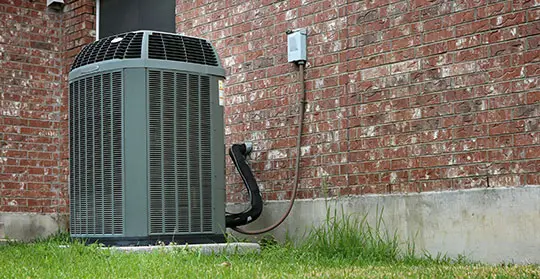
Does a heat pump work in a Columbia winter?
Yes — with a backup-heat plan, which is the part cheap quotes skip. Columbia's normal January low is about 21°F, and January alone accounts for 1,094 of the year's 5,024 heating degree days. A standard air-source heat pump loses capacity as outdoor temperatures drop, and roughly that 20-something range is where most units cross below the heat your house is losing. That crossover is called the balance point, and below it something else has to make up the difference:
- Electric auxiliary heat — resistance strips in the air handler. Simple, effective, and the most expensive heat you can buy on a cold morning.
- A cold-climate heat pump — variable-capacity equipment that holds far more of its output at low temperatures, pushing the balance point down.
- Dual fuel — pair the heat pump with a gas or propane furnace and let the furnace take the coldest hours.
We calculate the balance point for your house and set the changeover so the system switches on temperature, not on guesswork. Compare the options in our heat pump vs. furnace guide for Columbia.
Is dual fuel the right answer for my house?
For a Columbia home that already has a working gas or propane furnace and a dying air conditioner, dual fuel is frequently the best value in the whole catalog. You replace the outdoor unit with a heat pump, keep the furnace as the backup stage, and run the efficient side of the system through the long mild stretches of a Missouri fall and spring — the weather that produces most of those 5,024 heating degree days, since deep cold is only a handful of weeks.
Outside the city, dual fuel carries its own incentive: Boone Electric Cooperative pays $300 per dual-fuel system with a minimum HSPF2 of 7.5, on a new install, up to two systems per member, expiring December 31, 2026. Boone Electric serves all of Harrisburg and all of Rocheport along with much of the county — check the name on your electric bill, then see Boone Electric rebates.
What's included in a heat pump installation?
- Heating and cooling load calculations — a heat pump has to satisfy both
- Balance-point analysis and a documented backup-heat strategy
- An AHRI-listed matched system so the rebate rating is the rating you actually get
- Outdoor unit set on a raised pad or stand with clearance for defrost runoff
- Line set, electrical, disconnect and — for dual fuel — furnace interface wiring
- A thermostat that can actually control two heat sources and lock out strip heat correctly
- Condensate handling, evacuation to a deep vacuum and a weighed-in charge
- Defrost cycle verification, airflow and temperature-rise checks at startup
- Mechanical permit filed and carried to final
- AHRI confirmation and the rebate application, submitted inside the six-month window
What does the process look like?
- Home assessment — current fuel, equipment, ductwork, electrical service and insulation.
- Rebate check — which utility serves you, and whether your existing system makes you eligible for Efficient Electrification.
- Design — capacity, balance point, and the backup-heat choice, with the options priced side by side.
- Permit filed before work starts; Columbia's mechanical permits go through the EnerGov Citizen Self Service portal.
- Installation — usually one to two days depending on whether ductwork or electrical work is involved.
- Commissioning — charge verified, defrost tested, changeover temperature set and explained.
- Paperwork — permit to final, AHRI confirmation, rebate application filed.
Which heat pump configuration fits?
| Configuration | Best fit | Rebate potential |
|---|---|---|
| Single-stage air-source, SEER2 15.2–18.1 | Homes with existing ductwork and a modest budget | $800 (+$1,200 if leaving gas or propane) |
| Variable-capacity / cold-climate, SEER2 18.2+ | Homes that want the lowest balance point and the quietest operation | $1,200 (+$1,200 if leaving gas or propane) |
| Dual fuel (heat pump + furnace) | Gas or propane homes with a good furnace and a failing A/C | Efficiency tier; $300 from Boone Electric outside the city |
| Ductless mini split heat pump | Homes with no usable ductwork, additions, sunrooms | Depends on configuration — we confirm before you buy |
| Geothermal (ground source) | Acreage, long-term ownership, highest efficiency | $1,200 city for units under 5 tons; $750/ton from Boone Electric |
What affects the cost of a heat pump installation?
- Capacity and efficiency tier — the SEER2 and HSPF2 class you choose
- Backup heat — electric strips, an existing furnace, or a new dual-fuel pairing
- Electrical service — a heat pump with strip heat draws far more than a condenser did
- Ductwork — heat pumps deliver cooler supply air than a furnace, so undersized ducts show up fast
- Controls — a true dual-fuel thermostat and outdoor sensor
- Placement — elevation for defrost drainage, clearances, and line-set routing
- Your current fuel — it decides whether $1,200 of electrification money is on the table
We do not publish prices, because a heat pump quote that ignores your balance point and your rebate eligibility is not a quote — it is a guess. We look at the house first.
Where we install heat pumps
Heat pumps make sense in different ways across Boone County. In Harrisburg, where 46.2% of homes burn propane and only 4.3% have natural gas, converting to a heat pump takes a whole fuel delivery out of the household budget. In Hartsburg, already close to half electric, the upgrade path is usually from an old electric furnace to a modern heat pump — efficiency rebate only, but a real comfort gain. In Rocheport, where the median home dates to 1938, ductless heat pumps solve houses that never had ducts. And across Ashland and Columbia's newer subdivisions, the conversation is usually dual fuel versus a straight replacement. Related services: furnace installation, A/C installation, furnace repair and maintenance plans.
Heat Pump FAQs
How much is the Columbia heat pump rebate?
A qualifying replacement heat pump earns $800 at SEER2 15.2 to 18.1 or $1,200 at SEER2 18.2 and above from Columbia Water and Light. Separately, the Efficient Electrification program pays $1,200 when an existing home replaces a gas or propane heating system with a qualifying heat pump of at least 1.5 tons and 15.2 SEER2, limited to one per residence.
I already have a heat pump. Can I still get the Efficient Electrification rebate?
No. The program's rule is explicit: if the system being replaced already contained a heat pump or an electric furnace, no rebate is available. Efficient Electrification is a fuel-switching incentive, so it only pays when a home moves off gas or propane. The standard SEER2 efficiency rebate of $800 or $1,200 can still apply to your replacement.
Does a heat pump actually work in a Columbia winter?
Yes, with a backup-heat strategy. Columbia's normal January low is right around 21 degrees, which is precisely where a standard air-source heat pump's capacity falls off and where the system needs either electric auxiliary heat or a gas furnace to take over. That is a design decision, not a defect, and it is the single most important conversation to have before you buy.
What is a dual-fuel heat pump?
A dual-fuel system pairs a heat pump with a gas or propane furnace. The heat pump handles the mild weather that makes up most of a Columbia heating season, and below a balance point we set for your home, the furnace takes over. You get heat-pump efficiency in the shoulder seasons and furnace output on the coldest mornings, on one thermostat.
What size heat pump do I need?
It comes from a load calculation, and heat pump sizing is more delicate than furnace sizing because the same equipment has to satisfy both a 5,024 heating degree day winter and a 1,248 cooling degree day summer. The Efficient Electrification rebate also sets a floor of 1.5 tons and 15.2 SEER2, and Columbia Water and Light may deny a rebate on a unit it considers oversized.
I heat with propane outside the city. What applies to me?
If Boone Electric Cooperative sends your electric bill, the city program does not apply, but the co-op has its own: $300 per dual-fuel system with a minimum HSPF2 of 7.5 on a new install, up to two systems per member, expiring December 31, 2026. Boone Electric serves all of Harrisburg and all of Rocheport, among other areas. Check the utility name on your bill, because the answer decides which program you use.
Is there a federal tax credit for a heat pump in 2026?
No. The federal 25C Energy Efficient Home Improvement Credit and the 25D Residential Clean Energy Credit both ended for property placed in service after December 31, 2025 under Public Law 119-21. Many contractor sites still advertise them. Utility rebates are what is actually available now.