When a Columbia air conditioner stops cooling, the cause is usually one of six things: a failed run capacitor, a burned contactor, a stalled condenser fan motor, a refrigerant leak, a frozen evaporator coil, or a plugged condensate drain that has tripped the safety switch. We find which one it is, quote the repair before we make it, and we do not charge extra for nights, weekends or holidays. Call (573) 204-6161 and we'll get someone out.
Summer here is a real load, not a formality. Columbia averages 1,248 cooling degree days a year, with July at 382 and August at 350 — more than half the season's cooling demand lands in those two months. The normal July high is close to 88°F, and the all-time record of 113°F (set in July 1954) is a reminder of what the extreme end looks like. An air conditioner that limps through June will fail during the first sustained stretch of mid-90s afternoons, which is exactly when everyone else is calling too.
Signs your air conditioner needs repair
- Air from the registers isn't cold even though the blower is running.
- The outdoor unit hums but the fan doesn't turn — classic capacitor symptom, and continuing to run it can cook the compressor.
- Ice on the refrigerant lines or the indoor coil.
- The breaker trips every time the condenser tries to start.
- Water around the indoor unit, a ceiling stain below an attic air handler, or a system that shuts itself off on a hot day (float switch doing its job).
- The system runs constantly and still can't hold setpoint on a 95° afternoon.
- Short cycling — the compressor starts and stops every few minutes.
- Loud noises: grinding, screeching, a hard clunk at start-up, or a hissing that suggests a refrigerant leak.
- Musty smells when the system runs, which usually points at the coil, the drain pan or the ductwork.
- Humidity that won't come down even when the temperature does — often an oversized system or an airflow problem.
What we check on a no-cooling call
- Thermostat and control circuit. Confirm there is a real call for cooling and that 24 volts is reaching the contactor.
- Power at the outdoor unit. Breaker, disconnect, and the fuses that fail far more often than people expect.
- Electrical components. Capacitor microfarads under load, contactor condition, compressor and fan motor windings, hard-start components if fitted.
- Airflow indoors. Filter, blower wheel, evaporator coil condition, and static pressure — a dirty coil looks like a refrigerant problem until you measure.
- Refrigerant circuit. Suction and liquid pressures, superheat and subcooling, line temperatures, and a leak search when the numbers say the charge is short.
- Condensate. Trap, drain line, pan and float switch — a blocked drain is one of the most common "my A/C just quit" calls we take.
- The explanation. What failed, why it failed, what the fix costs, and whether the repair makes sense on equipment that age — before we start.
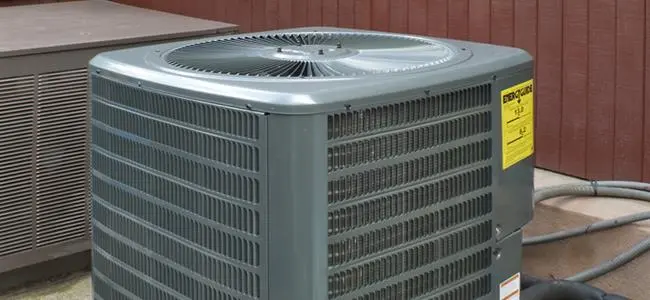
The A/C failures we see most in Columbia
| What you notice | What it usually is |
|---|---|
| Outdoor unit hums, fan blade won't spin | Run capacitor, or a seized condenser fan motor |
| Nothing at all outside, blower runs inside | Contactor, fuses in the disconnect, or tripped breaker |
| Cools weakly, then ices up | Low charge from a leak, or restricted airflow |
| System quits on the hottest afternoons | Overheating compressor, hard-start issue, or a dirty condenser coil |
| Shuts off with water in the pan | Plugged condensate drain tripping the float switch |
| Cold at one end of the house, warm at the other | Duct leakage, undersized returns or a balancing problem |
| Runs nonstop but never satisfies | Undersized or failing equipment, leaking ducts, or attic heat gain |
Why is my A/C frozen, and what should I do about it?
Ice on the coil or the copper lines means the coil is running below freezing — which happens when airflow across it is too low or the refrigerant charge is short. Shut the cooling off at the thermostat and set the fan to ON so room air can thaw it, then change the filter and open every register. Never chip at the ice or run the system while it is frozen; liquid refrigerant returning to the compressor is what turns a repair into a replacement. If it freezes again after a clean filter and a full thaw, the cause is nearly always a leak or a coil that needs cleaning — and sometimes the real issue is duct-side, which is where air duct cleaning in Columbia and duct sealing come in.
Refrigerant leaks and older systems
Refrigerant is not a consumable. If your system is low, it leaked, and topping it off without finding the leak just sells you the same repair again next summer. We search the circuit, show you what we found, and give you the honest version of the decision. That decision is different on an older R-22 system: R-22 has not been produced or imported in the United States since 2020, so only reclaimed supply remains, and a major leak on an aging R-22 unit often argues for replacement rather than another charge.
Emergency and after-hours A/C repair — at no extra charge
We answer the phone 24 hours a day, seven days a week, and there is no after-hours, weekend or holiday premium on the invoice. That matters more than it sounds: a house without cooling during a July heat stretch is a genuine problem for infants, older adults and anyone with a respiratory condition, and nobody should be weighing a surcharge against that. Details are on our 24/7 emergency HVAC page. Every repair is backed by our 100% satisfaction guarantee.
Repair or replace — and the rebate that changes the math
If the compressor is dead, the coil is leaking, or the unit is old enough that parts are getting scarce, replacement deserves a look — and in Columbia the rebate is large enough to change the comparison. Columbia Water & Light pays $800 on a replacement air conditioner or heat pump rated SEER2 15.2–18.1 and $1,200 at SEER2 18.2 or higher, for City of Columbia Utilities electric customers. Geothermal under 5 tons earns $1,200, and a smart thermostat is worth up to $50.
The catches: the rebate is replacement only (it does not apply to new construction), the application and receipts are due within six months of installation, and the packet requires a final mechanical permit plus AHRI Directory documentation. Columbia's own guidance notes those permits are usually obtained by the contractor — we pull the permit and file the rebate paperwork. See the full Columbia Water & Light HVAC rebate guide, or the Boone Electric rebate page if your meter is outside the city. Our post on repairing versus replacing an HVAC system works through the same decision step by step.
Planning a replacement? Ask about a heat pump
Because a heat pump both cools and heats, it can collect the same SEER2 rebate as an air conditioner and, if you're moving off gas or propane, the $1,200 Efficient Electrification rebate. See heat pump installation in Columbia and our comparison of heat pumps versus furnaces in Columbia's climate.
What affects the cost of an A/C repair
- The failed component. A capacitor and a compressor are at opposite ends of the range.
- Refrigerant type and quantity. Repairing a leak, evacuating and recharging is a bigger job than a straightforward electrical fix, and older refrigerants cost more.
- Where the equipment lives. An attic air handler in August is slower and harder to work on than a basement unit.
- Parts availability for your model and age of equipment.
- Whether ductwork is the real problem. Sometimes the equipment is fine and the distribution isn't.
- Maintenance history. Systems on an annual service agreement fail less often and usually fail smaller.
We don't post flat prices, because a number quoted before anyone has looked at your system isn't a real number. You get the price after diagnosis and before the work.
A/C repair across Columbia and Boone County
We cover the whole county. In Ashland, where the median home was built in 2006, most calls are on 2000s-era systems now hitting first-replacement age. Rocheport's median build year of 1938 and Sturgeon's 1958 mean more retrofit cooling, high-static ductwork and ductless solutions. We also work in Centralia, Hallsville, Harrisburg and Hartsburg, plus Columbia neighborhoods including Historic Old Southwest, East Campus, Benton-Stephens and Vanderveen Crossing.
For replacement work, see air conditioning installation in Columbia; for the full picture of our cooling services, see our air conditioning contractor page; and to keep the next failure from happening in July, look at our annual maintenance plans.
Air Conditioning Repair FAQs
Why is my air conditioner running but not cooling?
If the indoor blower is moving air but nothing coming out is cold, the outdoor unit is usually not doing its job. The most common causes are a failed run capacitor, a burned contactor, a condenser fan motor that has stopped, a tripped breaker or disconnect at the outdoor unit, and low refrigerant charge caused by a leak. A badly clogged filter or an iced-over evaporator coil will also cut cooling while the fan keeps running.
Can you come out the same day?
Same-day service is what we aim for on no-cooling calls, and we answer the phone 24 hours a day if it fails at night or over a weekend. There is no after-hours, weekend or holiday surcharge, so calling at 9pm on a Saturday costs no more than a Tuesday morning appointment.
My A/C is frozen solid. What should I do?
Turn the cooling off at the thermostat and switch the fan to ON. That runs room air across the coil and thaws it without adding more moisture. Do not chip at the ice. While it thaws, replace the filter and open every supply register. Ice forms when the coil gets too little airflow or the refrigerant charge is low, so once it clears the underlying cause still needs to be found. If it freezes again after a thaw and a new filter, it is almost always a refrigerant leak or a dirty evaporator coil.
Is it worth adding refrigerant to an older system?
Refrigerant is not consumed, so a system that is low has a leak somewhere. We look for the leak rather than simply topping the charge off and leaving. On newer equipment, repairing the leak and recharging is usually the right call. On an older R-22 system it is a harder decision, because R-22 has not been produced or imported in the United States since 2020 and only reclaimed supply remains. We will show you what we found and let you decide.
What rebate can I get if I replace my air conditioner in Columbia?
City of Columbia Utilities electric customers can claim $800 from Columbia Water and Light on a replacement air conditioner or heat pump rated SEER2 15.2 to 18.1, or $1,200 at SEER2 18.2 and above. The rebate covers replacements only, not new construction, and the application with receipts is due within six months of installation along with a final mechanical permit. We pull the permit and file the paperwork for you.
Do you repair heat pumps and ductless systems in cooling mode?
Yes. A heat pump is an air conditioner that can run in reverse, so no-cooling calls on heat pumps are routine work for us, including reversing valve and defrost board faults. We also service ductless mini-split systems, which are common in older Columbia-area homes that were never ducted. We service all brands whether or not we installed the equipment.
How often should an air conditioner be serviced?
Once a year before cooling season, and twice a year if the same equipment also heats the house, as a heat pump does. Columbia averages 1,248 cooling degree days with July and August alone accounting for more than 700 of them, so a system that starts the summer with a dirty condenser coil or a weak capacitor will usually be the one that fails in the first stretch of 95-degree afternoons. Our annual service agreements exist for exactly that reason.